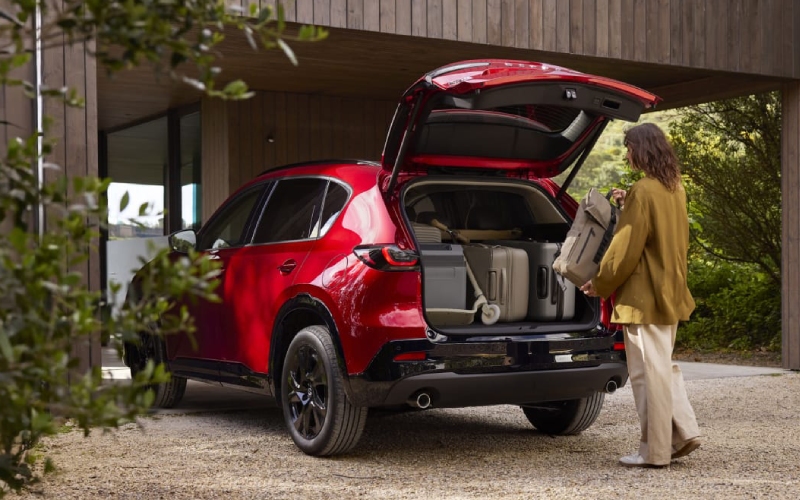
Tustin Mazda - Is the 2026 Mazda CX-5 more comfortable and quieter than the 2026 Toyota RAV4 for everyday drives around Irvine, CA?
When shoppers start comparing the latest compact SUVs, one question rises to the top: which one will genuinely feel quieter and more comfortable in day-to-day driving? If your routes take you through Irvine, CA, with frequent stints on the 405 and stop-and-go moments near campus or the Spectrum area, the details that shape quietness and comfort matter more than a spec sheet. Both the 2026 Mazda CX-5 and the 2026 Toyota RAV4 are newly updated, each bringing fresh design, a deeper tech stack, and a stronger focus on driver assistance. But their paths to everyday refinement are very different — and those differences show up the moment you settle in, cue up directions, and set off for a typical OC commute.
The 2026 CX-5 advances Mazda’s calm-cabin philosophy. Larger door openings and added rear-seat space reduce the little frictions that accumulate during school runs and carpool pickups. Material selections read upscale without being flashy, and new ambient lighting along the front door trims — with seven selectable colors — sets a subtle tone in low light. The available 15.6-inch integrated touchscreen is the largest ever in a Mazda and uses Google built-in. That matters because the interface behaves like the smartphone ecosystem you already use: Google Maps is straightforward, voice assistance is natural, and the home screen is customizable. Toyota, for its part, brings a standard 12.3-inch digital gauge cluster and an available 12.9-inch multimedia touchscreen to the 2026 RAV4, backed by Toyota Safety Sense 4.0 and optional conveniences like Advanced Park and Traffic Jam Assist. The tech capability is strong, yet the CX-5’s single, expansive integrated screen and consistent UI reduce tap-hunting and help keep cabin chatter relaxed.
Ride quality and quietness: how both SUVs handle real-world OC roads
Comfort often comes down to tuning — how the suspension, powertrain, and noise control strategies work together. The CX-5’s 2.5-liter SkyActiv-G and 6-speed automatic have been recalibrated for sharper response when needed and a quieter, more relaxed demeanor the rest of the time. Standard i-Activ AWD is constantly reading the surface to manage traction smoothly, so you get confident launches and lane merges without abrupt shuddering in day-to-day use, which translates to fewer jolts and less cabin bustle, even when lanes get rutted between interchanges. The RAV4 counters with multiple drivetrains, including available AWD and hybrid or plug-in hybrid options that bring strong efficiency and acceleration. Toyota’s latest platform work also delivers stability and solid body control. Both SUVs are composed; the Mazda simply leans harder into consistent, low-drama motions that make conversations easy, calls clearer, and kids quieter in back.
Noise is another key separator. Mazda’s cabin strategy is to keep both engine and road noise on a short leash, emphasizing a soothing baseline that takes the sting out of bumper-to-bumper traffic. The RAV4 is notably improved over previous generations, and Toyota’s insulation choices are effective, but the CX-5’s tuning bias pushes it toward the premium end of the compact class. It’s the kind of difference you notice at 65 mph around a windy stretch near the El Toro Y — voices carry with less effort, and you arrive less fatigued.
Technology cohesion: fewer taps, more flow
On a rushed morning, cohesion beats complexity. The CX-5’s available 15.6-inch integrated touchscreen with Google built-in navigation, media, and voice control into one fluid system. It’s easy to sign into a Google Account, pull in saved places, and let Google Maps handle live traffic re-routing. The RAV4’s Toyota Audio Multimedia delivers crisp visuals, intuitive tiles, and connected features; it’s a smart, modern solution that works well. Yet, by unifying your everyday digital life into a single, expansive interface, the Mazda feels more natural — almost like taking your home screen with you. That smoothness matters when you’re juggling errands around Culver Drive, texts from daycare, and a meeting reminder as you approach Sand Canyon.
Everyday drivability: who nails the “set-and-forget” sweet spot?
It’s tempting to focus on headline features, but compact SUVs earn loyalty by nailing the baseline: how the seats feel after an hour, how predictable the throttle is in creeping traffic, how quickly you can park, and how deftly the cabin keeps distractions down. The CX-5’s larger door apertures and extra rear legroom simplify car-seat duty, and the available panoramic sunroof adds a light, open feel that quiets restless passengers. Toyota counters with its own strengths — a range of trims, available Advanced Park for button-press parking help, and a confidence-inspiring safety suite. Both vehicles have standard LED lighting, clear sightlines, and smart storage solutions. Mazda’s edge shows up in the “nothing-calls-attention-to-itself” tuning, the precise steering feel, and the way the interface lets you think about the drive instead of menu trees.
Who should choose which?
If you value breadth in powertrains and want a PHEV, the RAV4 lineup is compelling. If your top priority is a cohesive, calm, and premium-feeling daily drive with an interface that mirrors the way you already use technology, the CX-5 rises to the top. The good news is that both SUVs have made strides that Orange County families will appreciate. The better news is that real-world comfort and quietness — the kind you notice every mile — tip meaningfully in Mazda’s favor.
Frequently Asked Questions:
Does the 2026 CX-5 have a big touchscreen like the RAV4?
Yes. The 2026 CX-5 offers an available 15.6-inch integrated touchscreen, which is larger than the RAV4’s available 12.9-inch system, and it includes Google built in for straightforward navigation and voice assistance.
Is AWD standard on the CX-5?
Yes. i-Activ AWD is standard on every 2026 CX-5, delivering confident traction without requiring an extra package. The RAV4 offers AWD on select models.
Which feels quieter at freeway speeds?
While both SUVs are well-insulated, the CX-5’s powertrain and chassis tuning emphasize a quieter, low-vibration character that stands out on the 405 and during long stretches through Irvine, CA.
Do both SUVs include advanced safety features?
Yes. Mazda equips the CX-5 with a robust suite of standard and available i-Activsense technologies, and Toyota includes Toyota Safety Sense 4.0 on every RAV4. The goal is the same — support the driver and help reduce fatigue.
How do I decide between them?
Test how each SUV fits your life. If a serene cabin, an intuitive big-screen interface, and standard AWD top your list, the CX-5 likely matches your routine better. If you want a PHEV option or automated parking, the RAV4 lineup may suit you.
When you are ready to compare them side by side, Tustin Mazda is here to help with knowledgeable, friendly guidance — serving Irvine, Aliso Viejo, and Lake Forest with a focus on real-world needs and straightforward answers.
Our team encourages you to bring your daily routine, your favorite device, and your usual passengers. We’ll help you see — and feel — which SUV keeps stress low and comfort high on the routes you drive most.