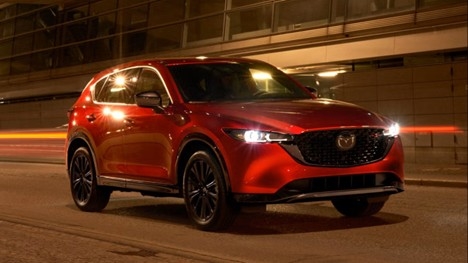
Mazda i-Activsense Safety Technology Explained: A Southern California Driver's Guide
Mazda’s i-Activsense is a comprehensive suite of advanced safety technologies designed to prevent collisions and reduce accident severity, acting as a smart co-pilot that protects drivers on busy Southern California streets. These active features use sensors, cameras, and radar to monitor the surroundings, predicting hazards and providing timely alerts. The core philosophy is to empower the driver with non-intrusive support, enhancing control rather than replacing it. At Tustin Mazda, part of the Patterson Autos family, we help our community understand how this technology provides essential confidence and protection for every drive in the Orange County area.
Smart Brake Support: What is the difference between SBS and Smart City Brake Support?
Smart Brake Support (SBS) and Smart City Brake Support (SCBS) are core components of the i-Activsense system, both functioning as types of Automatic Emergency Braking (AEB), but they are engineered to operate in different speed ranges. SBS is the high-speed system, which monitors the road ahead using radar to determine the likelihood of a collision with an object, vehicle, or sometimes a pedestrian at higher speeds, typically above 10 mph. If a collision is deemed probable and the driver does not take corrective action, the system first warns the driver and then automatically applies the brakes to mitigate the impact or prevent the crash entirely.
SCBS is the low-speed counterpart, typically operating in urban driving scenarios, like stop-and-go traffic in Tustin, generally active up to speeds of about 18 mph, though Advanced Smart City Brake Support (Advanced SCBS) is now integrated with pedestrian detection and operates at speeds up to 50 mph. SCBS primarily uses a laser sensor or a forward-sensing camera to detect vehicles directly in front of you. When the system detects an impending collision, it prepares the brakes for maximum stopping power or applies them automatically if no driver input is registered. Modern Mazda vehicles include pedestrian and cyclist detection as part of their forward detection functions, significantly increasing safety in crowded areas.
How does the Driver Attention Alert (DAA) system work on a Mazda?
The Driver Attention Alert (DAA) system is a critical long-distance safety feature designed to combat driver fatigue, especially during lengthy road trips common for Southern California residents, such as a drive up the 5 freeway. This intelligent system begins to learn your individual driving characteristics, including steering input and lane position, after about 20 minutes of continuous driving at highway speeds, typically between 41 mph and 86 mph. DAA monitors these inputs for changes that suggest the driver is becoming drowsy or distracted, such as inconsistent steering or drifting within the lane markings.
When DAA detects abnormal driving behavior that deviates from the learned pattern, it issues a visual warning, often a coffee cup icon and a message suggesting a break, and an audible alert to prompt the driver to pull over and rest. The system will not issue a new alert for an additional 60 minutes after the first warning to prevent repetitive distraction. DAA is purely a warning system and does not take physical control of the vehicle, reinforcing the driver-centric focus of Mazda’s engineering.
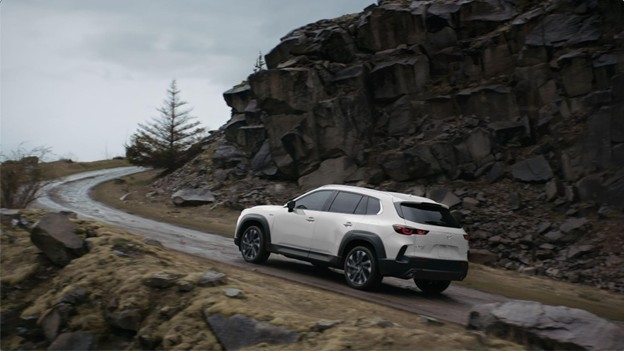
What i-Activsense features help with highway driving on the 405?
Navigating the busy, multi-lane highways like the 405 or 55 freeways in Orange County is made less strenuous by several i-Activsense features, which reduce driver strain and increase awareness of surrounding traffic. Mazda Radar Cruise Control (MRCC) with Stop & Go functionality uses radar to maintain a set distance from the vehicle ahead, automatically adjusting the vehicle’s speed, even bringing it to a complete stop and resuming travel in heavy traffic. This is particularly valuable for the frequent gridlock experienced during rush hour.
The Blind Spot Monitoring (BSM) system utilizes radar sensors in the rear bumper to detect vehicles entering your blind spot, providing a visual warning light in the corresponding side mirror. If you activate your turn signal while a vehicle is detected, the system adds an audible alert. This is paired with Rear Cross Traffic Alert (RCTA), which detects approaching vehicles when you are backing out of a parking space, giving a warning if a car is approaching from the side. Additionally, the Lane Departure Warning System (LDWS) and Lane-Keep Assist System (LAS) work together to monitor lane markings and provide gentle steering correction or a warning if the vehicle begins to drift unintentionally.
How does i-Activsense improve visibility at night?
Nighttime driving safety is enhanced by technologies like the Adaptive Front-lighting System (AFS) and High Beam Control (HBC). AFS improves visibility around corners by pivoting the headlights in the direction of the turn, based on steering input and vehicle speed, helping you see better on curved on-ramps or winding roads.
HBC automatically switches the headlights between high and low beams. It uses a forward-sensing camera to detect the headlights of oncoming vehicles and the taillights of vehicles ahead, ensuring you maintain maximum forward visibility without blinding other drivers. This automated control is a simple yet effective way to reduce the need for constant driver input at night, contributing to overall safety on unlit stretches of road.
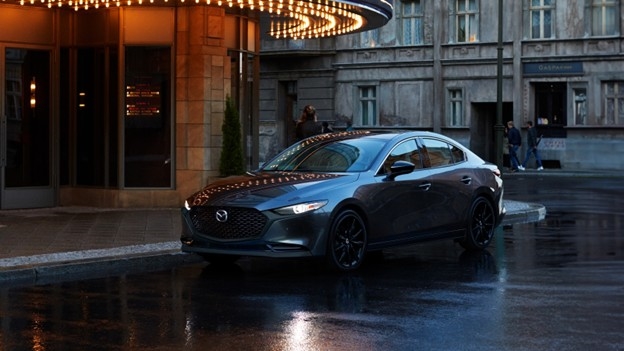
What other safety systems are standard on Mazda vehicles?
Beyond the active i-Activsense suite, every Mazda vehicle features a robust foundation of passive and core active safety systems that contribute to its high safety ratings. The SKYACTIV-Body employs a ring structure and strategic use of high-tensile steel to create a rigid, energy-absorbing passenger cell that directs impact forces away from occupants in the event of a collision. Standard equipment includes an array of advanced airbag systems and seatbelts with pretensioners and load limiters to secure occupants during a crash.
Core systems like the Anti-lock Braking System (ABS), Electronic Brakeforce Distribution (EBD), and Dynamic Stability Control (DSC) work in the background to maintain vehicle control during sudden maneuvers or challenging road conditions, such as the unexpected rain often encountered in Southern California. The Tire Pressure Monitoring System (TPMS) also ensures tires are properly inflated, which is critical for safety and efficiency.
How to experience i-Activsense features near Tustin, CA?
At Tustin Mazda, part of the Patterson Autos family, we’re dedicated to ensuring our community drivers understand the immense value of these advanced safety systems. For those driving the freeways and surface streets of Southern California, the i-Activsense suite provides an extra layer of confidence and protection. We invite you to visit our showroom to experience a personalized demonstration of how safety features like Smart Brake Support, Mazda Radar Cruise Control, and Blind Spot Monitoring work seamlessly to support your driving. Understanding these systems through a test drive will highlight how Mazda engineers the vehicle to work in harmony with the driver, fostering a more secure and enjoyable experience for your daily commute or weekend escape.
*Penned by AI, polished by humans