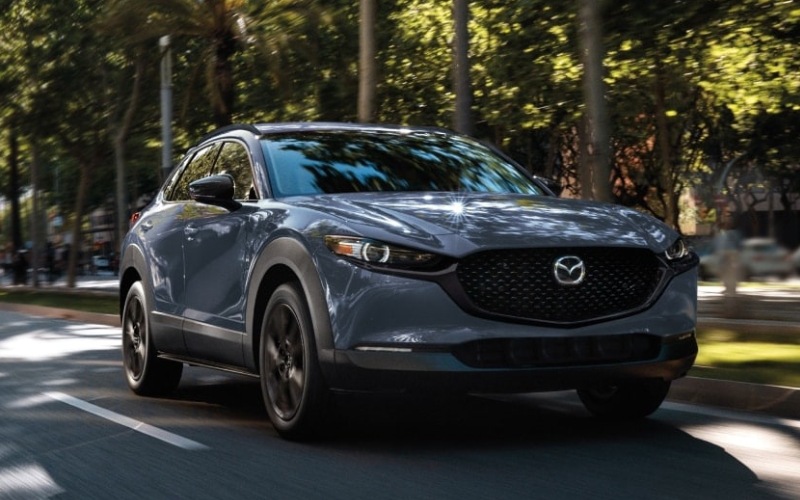
Tustin Mazda - Mazda SUVs vs Toyota SUVs for Smoother 405 Commutes near Irvine, CA
Everyday life around Irvine asks a lot of an SUV. Morning merges on the 405 and 5, mid-day errands through the Irvine Spectrum and The Market Place, quick climbs up Laguna Canyon Road, and evening coastal drives to Newport Beach all demand a cabin that stays calm, steering that feels precise, and technology that takes the edge off stop-and-go traffic. At Tustin Mazda, we speak with shoppers who often compare Mazda SUVs with Toyota SUVs because both brands are known for reliability, advanced safety, and broad lineups. If your top priority is a smoother, more refined commute backed by confident road manners, this comparison focuses on how each brand approaches ride quality, driver engagement, and day-to-day usability in Orange County.
Both brands offer strong choices. Toyota brings extensive hybrid availability and a reputation for durability. Mazda focuses on human-centric engineering—how the vehicle moves with you—so the drive feels more natural and less fatiguing. That difference becomes apparent on grooved freeway concrete, crowned surface streets, and during lane changes through dense traffic on Jamboree Road. Below, we break down what matters most for Irvine-area driving and where Mazda’s approach pays off.
Mazda’s ride and handling philosophy centers on balance. Across SUVs like Mazda CX-30, CX-5, CX-50, CX-70, and CX-90, the suspension tuning, steering weight, and body control are calibrated to reduce head toss and maintain stability over expansion joints and patched pavement. G-Vectoring Control Plus subtly manages engine torque to help settle the vehicle as you turn and straighten, so transitions feel smooth and predictable. On the 55 or 73, where on-ramps and lane shifts stack up quickly, that calm, planted feel adds confidence without resorting to a harsh ride.
Toyota SUVs—including Corolla Cross, RAV4, Highlander, and Grand Highlander—deliver secure handling and straightforward control. The brand’s tuning often emphasizes light-effort steering and accessible comfort. That approach is easy to live with, and models like RAV4 and Highlander provide a stable, family-friendly feel. For drivers who want more connection through the wheel and a subtler, more composed response over uneven pavement, Mazda’s emphasis on nuanced feedback stands out during back-to-back test drives.
Cabin serenity is just as important. Mazda cabins are designed with meticulous attention to noise, vibration, and harshness. Careful door sealing, acoustic glass availability, and sound insulation work together so conversations remain natural at 65 mph on the 405’s textured concrete. Materials and switchgear are crafted to look and feel cohesive, minimizing visual clutter and helping your eyes stay relaxed on longer trips between Tustin Ranch and UCI. The result is a sense of quiet composure that helps you arrive refreshed.
Toyota interiors are thoughtfully packaged and durable, with family-friendly storage and a tech-forward layout. The latest Toyota Audio Multimedia system is responsive and widely offers wireless smartphone integration. Toyota prioritizes function first, and the spaces are practical. Mazda, by contrast, blends premium textures with a minimalist control scheme—physical knobs for core functions and an intuitive interface—making frequent adjustments feel deliberate rather than distracting. When traffic compresses through the 5/55/22 interchange, less distraction and a quieter backdrop make a meaningful difference.
Advanced driver assistance helps daily in Irvine’s ebb-and-flow traffic. Many Mazda SUVs include i-Activsense driver-assistance features such as Mazda Radar Cruise Control with Stop & Go, Lane-keep Assist, Blind Spot Monitoring, and Smart Brake Support. The tuning aims for smooth, natural corrections that feel human in pacing and steering assistance. Available Traffic Jam Assist on select models can reduce fatigue during the crawl past MacArthur and Dyer by managing low-speed acceleration, braking, and steering support within system limits.
Toyota Safety Sense is a strength for the brand, with features like adaptive cruise control, lane tracing assist, and pre-collision systems widely available. The suite is comprehensive and continues to evolve. Side-by-side, shoppers often notice Mazda’s steering feel and pedal modulation pair seamlessly with assistance systems, preserving the natural rhythm of driving rather than drawing attention to the technology. That integration contributes to fewer abrupt inputs—key for motion-sensitive passengers or long drives across Orange County.
Confidence in wet weather is another local consideration. When those coastal systems move in, and PCH or the 133 gets slick, Mazda i-Activ AWD® constantly monitors wheel speed, steering, throttle, and brake inputs to help predict slip before it happens. The system can send torque proactively, which enhances stability as you merge across standing water or crest freeway joints in the rain. Available Mi-Drive modes—including Off-Road or sport-tuned settings, depending on model—further tailor traction and throttle response for the situation.
Toyota offers multiple AWD systems across its SUV lineup, delivering secure traction for daily rain and light trails. The approach is confident and proven, and models like RAV4 provide selectable modes for different surfaces. The distinction most Irvine shoppers feel is Mazda’s subtle, predictive character—less drama, more poise—especially when lane changes and elevation shifts stack up in quick succession on the 241 or 261 toll roads.
Efficiency and powertrain variety matter, too. Toyota leads with a wide range of hybrid SUVs that fit efficiently into the daily OC routine. Mazda offers multiple paths to smooth, responsive power: refined naturally aspirated engines, available SKYACTIV-G 2.5 Turbo for strong midrange passing on the 405, and electrified options, including the Mazda CX-90 Plug-in Hybrid for all-electric neighborhood drives with gas flexibility for weekends. The Mazda CX-50 Hybrid adds an efficient take on a versatile, outdoor-ready compact SUV—ideal for canyon hikes and Costco runs without refueling anxiety.
Parking and maneuvering near Irvine Spectrum or Downtown Tustin is where visibility and driver aids shine. Available Mazda features like a 360° View Monitor, front and rear parking sensors, and clear sightlines over the hood take the stress out of tight structures. Toyota’s available panoramic camera systems are helpful as well; both brands assist effectively in close quarters. The difference is how composed the vehicle feels as you ease over speed bumps and navigate narrow ramps—Mazda’s throttle and brake calibration keep movement smooth and predictable.
To simplify your research, here is a quick, real-world comparison based on what our Orange County drivers tell us they value most. Each point reflects daily life near Irvine rather than lab specs.
- Ride quality on grooved concrete: Mazda emphasizes suspension compliance and body control for calm progress; Toyota aims for broad comfort and stability with light-effort steering.
- Steering feedback during quick lane changes: Mazda tuning communicates road texture and grip naturally; Toyota prioritizes ease and consistency.
- Cabin quiet on freeway slabs: Mazda focuses on noise isolation and material harmony; Toyota balances durability with technology-forward layouts.
- Driver-assistance feel in traffic: Mazda’s i-Activsense targets smooth, human-like inputs; Toyota Safety Sense is robust and confident across scenarios.
- Rainy-day confidence: Mazda i-Activ AWD® acts proactively for planted traction; Toyota AWD systems deliver secure, selectable responses.
- Powertrain character: Mazda offers responsive turbocharged options and an available plug-in hybrid; Toyota offers extensive hybrid coverage across the lineup.
- Parking structure finesse: Mazda pairs clear sightlines with available 360° views and gentle pedal mapping; Toyota provides helpful camera tech with user-friendly operation.
If you are weighing both brands, a structured test loop tells the story better than spec sheets. Consider this simple plan that mirrors OC driving.
- Start with suburban streets from our showroom on Auto Center Drive to Jamboree Road to gauge low-speed smoothness and brake feel.
- Merge onto the 5 or 55 to evaluate cabin noise, steering stability, and driver-assistance pacing at speed.
- Exit toward the Irvine Spectrum to test visibility, camera clarity, and throttle modulation in a parking structure.
- Finish with a short run up Laguna Canyon Road to feel mid-corner composure and suspension recovery over patchy pavement.
Our team will set up back-to-back Mazda and Toyota drives using a consistent route so you can notice the differences that matter to you. We can also walk you through i-Activsense features and demonstrate how i-Activ AWD® responds when the weather turns along the coast. If weekend plans pull you toward family hauling, a three-row demo in the Mazda CX-90 alongside a comparable Toyota three-row SUV will highlight cabin quiet and third-row ride comfort over real Orange County roads.
Because we serve Irvine, Costa Mesa, Santa Ana, and Newport Beach every day, we tailor recommendations to your routine—whether that means frequent 405 commutes, school drop-offs in Woodbridge, or weekend hikes near Bommer Canyon. You will feel the Mazda difference most in motion: calm steering on crowned lanes, a relaxed cabin when traffic turns noisy, and tactile controls that reduce distraction.
Visit us at 28A Auto Center Dr, Tustin, CA 92782 to experience Mazda SUVs in the environment that matters—your daily life around Irvine. Our goal is to help you choose confidently, with clear, local insight and a test route that proves how each brand feels where you actually drive.
Frequently Asked Questions:
Which Mazda SUV feels the quietest on Orange County freeways?
Mazda CX-90 stands out for serene cruising, with CX-70 and CX-5 close behind. The combination of insulation, available acoustic glass, and refined powertrains helps conversations stay natural on the 405 and 5.
How does Mazda i-Activ AWD® help in Irvine’s rain?
i-Activ AWD® continually monitors inputs like steering angle, wheel slip, and brake pressure to predict traction needs and move torque proactively. That helps the vehicle feel settled over puddles and reflective freeway patches common after coastal showers.
I value efficiency. Should I choose a Mazda hybrid or a Toyota hybrid?
Both brands offer compelling paths to lower fuel use. Toyota provides broad hybrid availability. Mazda offers hybrid and plug-in hybrid choices, including the Mazda CX-90 Plug-in Hybrid for EV-style daily errands with gas flexibility. We recommend test-driving both to see which power delivery and cabin feel you prefer.
What should I look for on a back-to-back drive near Irvine?
Focus on steering feel during quick lane changes, how the cabin filters freeway noise, brake smoothness in traffic, and how driver-assistance maintains pace without abrupt corrections. Those factors reduce fatigue more than a spec line ever will.
Can Tustin Mazda set up a comparison route that mimics my commute?
Yes. We will tailor a loop based on your regular roads—whether that is the 405/55 merge, surface streets around University Park, or structured parking near Irvine Spectrum—so your decision reflects real life.
At Tustin Mazda, our commitment is simple: provide clear, local guidance and let the drive do the convincing. If a smoother, more composed commute near Irvine is your goal, Mazda’s human-centric approach delivers the poised, quiet experience that makes every mile feel easier. Reach out to our team to schedule your comparison drive and experience the difference firsthand.